
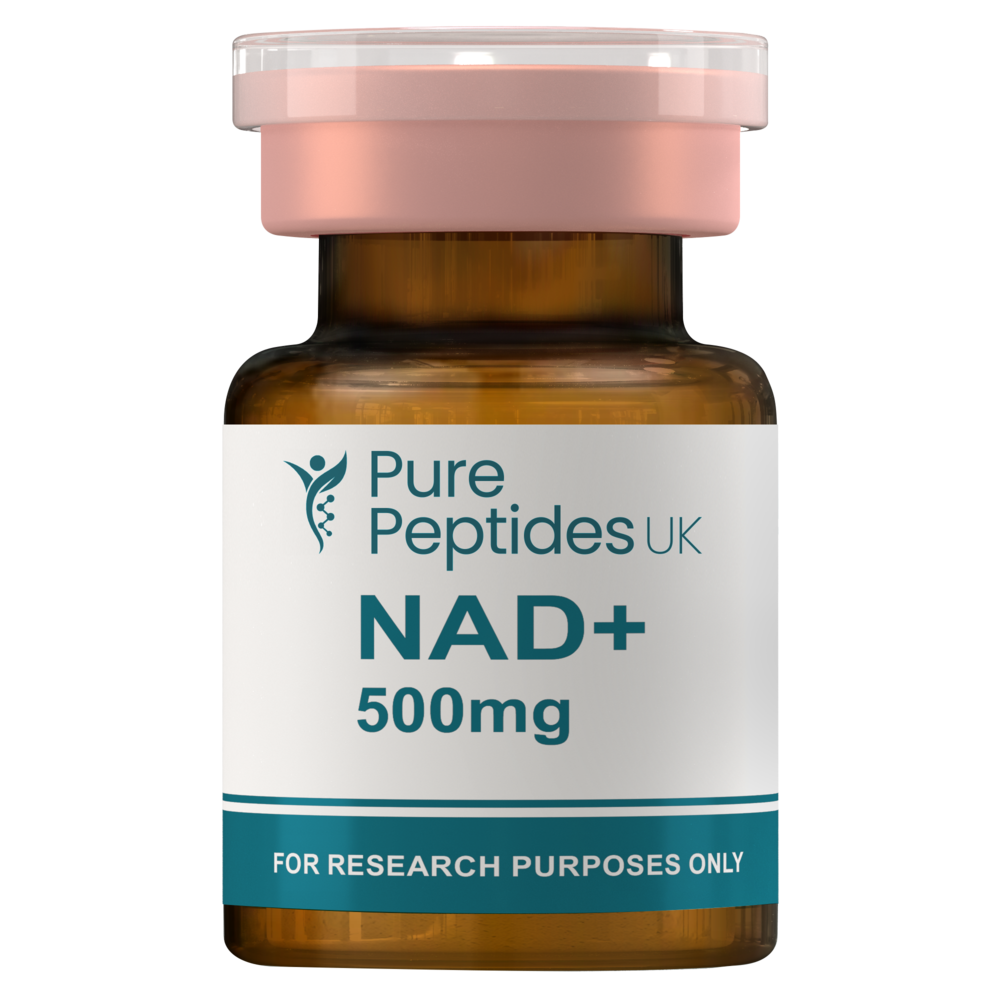


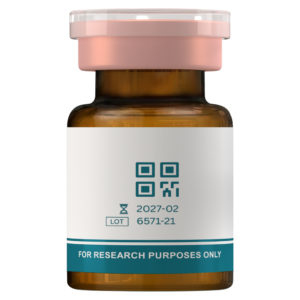
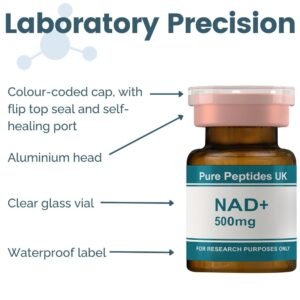


NAD+ 500mg
$40.00
NAD+ (Nicotinamide Adenine Dinucleotide) is a critical coenzyme composed of nicotinamide, adenine, ribose, and phosphate groups, widely studied for its role in cellular energy transfer and redox regulation. Research interest has grown around its involvement in metabolic function, oxidative stress, inflammation, cognitive performance, and skin health. NAD⁺ is known for its stability in dry form and its ability to influence intracellular NAD⁺/NADH ratios in experimental models. For research use only.
NAD+ Supplement – 500mg
NAD+ (Nicotinamide Adenine Dinucleotide) is a vital coenzyme found in all living cells, composed of nicotinamide, adenine, ribose sugars, and phosphate groups. It plays a central role as a redox carrier, cycling between its oxidized (NAD+) and reduced (NADH) forms to drive essential metabolic reactions. Supplied as a high-purity, research-grade 500 mg powder, NAD⁺ is intended exclusively for laboratory use in studies exploring cellular metabolism, redox regulation, and enzymatic processes. This compound is strictly for research use only and not for medical or therapeutic applications.
Research Focus and Areas of Interest
1. Metabolic Regulation
NAD+ is essential for metabolic processes including glycolysis, the tricarboxylic acid (TCA) cycle, and oxidative phosphorylation. It functions as an electron acceptor, facilitating the flow of energy within cells. Researchers studying cellular energy dynamics or testing metabolic flux in various model systems often supplement with NAD+ to assess redox balance and energy output in controlled experimental settings.
2. Enzyme–Cofactor Interactions
As a cofactor, NAD+ is required by numerous enzymes such as sirtuins, dehydrogenases, and PARPs (poly ADP-ribose polymerases). These enzymes are involved in a wide range of cellular processes, including DNA repair, chromatin remodeling, and protein post-translational modifications. Laboratory studies using NAD+ allow researchers to isolate and quantify its interactions in enzymatic assays or reconstituted biochemical systems.
3. Redox Homeostasis and ROS Signaling
In redox biology, NAD+ is used to investigate the cellular response to oxidative stress and reactive oxygen species (ROS). By modulating NAD+ concentrations, researchers can explore redox-sensitive pathways, antioxidant responses, and mitochondrial signaling, particularly in studies modelling stress-induced cell behavior or oxidative imbalance.
4. Neuroscience and Neuromodulation
NAD+ is increasingly studied in the context of neuronal energy metabolism and neuroprotective mechanisms. Researchers exploring synaptic activity, mitochondrial health in neurons, and neuromodulatory pathways often utilize NAD+ in ex vivo preparations or neuronal cultures to better understand how it supports metabolic maintenance and signaling under stress.
5. Cellular Senescence and Longevity Models
NAD+ is frequently examined in cellular aging and senescence models due to its role in maintaining metabolic integrity and genomic stability. Experimental systems designed to mimic age-related cellular changes often include NAD+ supplementation to monitor shifts in energy metabolism, stress tolerance, or sirtuin activity during culture-induced aging.
Conclusion
NAD+ (500 mg) offers a reliable and high-purity option for researchers engaged in diverse fields such as metabolism, redox biology, enzymology, and neuroscience. With its broad relevance across biological systems, NAD+ continues to be a compound of significant interest in advancing understanding of cellular energy, oxidative regulation, and molecular stability. Supplied as a powder and marked strictly for research use only, it is not intended for human or veterinary applications.
Technical Information:
• Synonyms: Nicotinamide Adenine Dinucleotide (oxidized form), NAD⁺
• IUPAC Name: β-Nicotinamide adenine dinucleotide
• Molecular Formula: C₂₁H₂₇N₇O₁₄P
• Molecular Weight: 663.43 g/mol
• CAS Number: 53‑84‑9
• PubChem CID: 439174
• Further References: PubChem Entry
Related Research Peptides
Researchers using NAD+ frequently explore complementary peptides that engage overlapping pathways in redox homeostasis, mitochondrial function, ageing, and inflammation:
• SS‑31 (10 mg) – A mitochondria-targeted peptide often researched alongside NAD+ in studies of oxidative stress and bioenergetic efficiency.
• Epitalon (10 mg) – A longevity-focused peptide studied in frameworks involving cellular ageing, telomere regulation, and redox balance.
• KPV (5 mg) – A tripeptide frequently featured in inflammation and immune modulation studies that intersect with NAD⁺-related oxidative pathways.
Stability: Store lyophilised protein at -20°c. Aliquot the product after reconstitution to avoid repeated freezing/thawing cycles. Reconstituted protein can be stored at 4°c for a limited period of time. The lyophilised protein remains stable until expiry date when stored at -20°c. For more information about storage, click here
Source: Biosynthesis
Reconstitution: Reconstitute with Bacteriostatic Water
Usage: Product is prepared for LABORATORY RESEARCH ONLY. NAD+ for sale at Pure Peptides UK is limited to scientific research and education only – Only buy NAD+ if you are a licenced researcher.
* Images for illustration purposes only
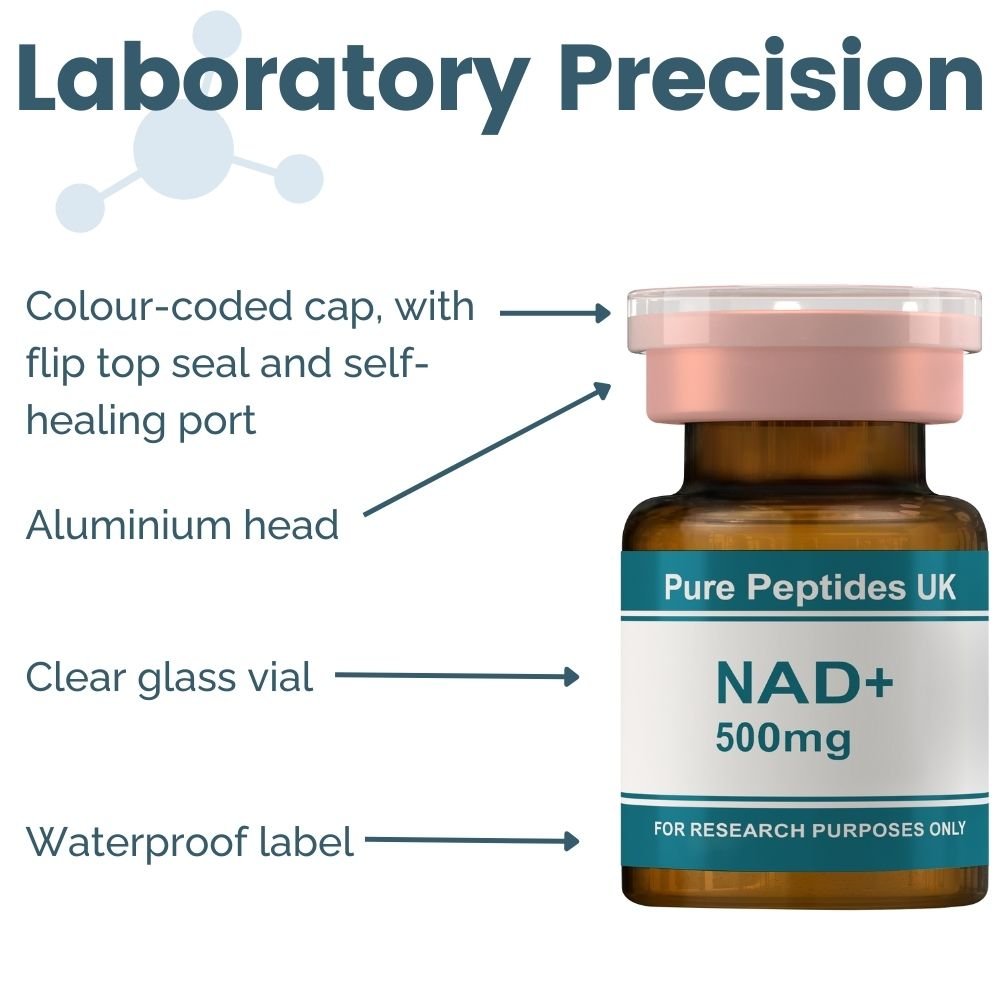
| Cap Colour | Clear/rose gold |
|---|
Related products


Longevity


Peptides
Peptides

Longevity
Injury Recovery
Peptides
Peptides
Peptides