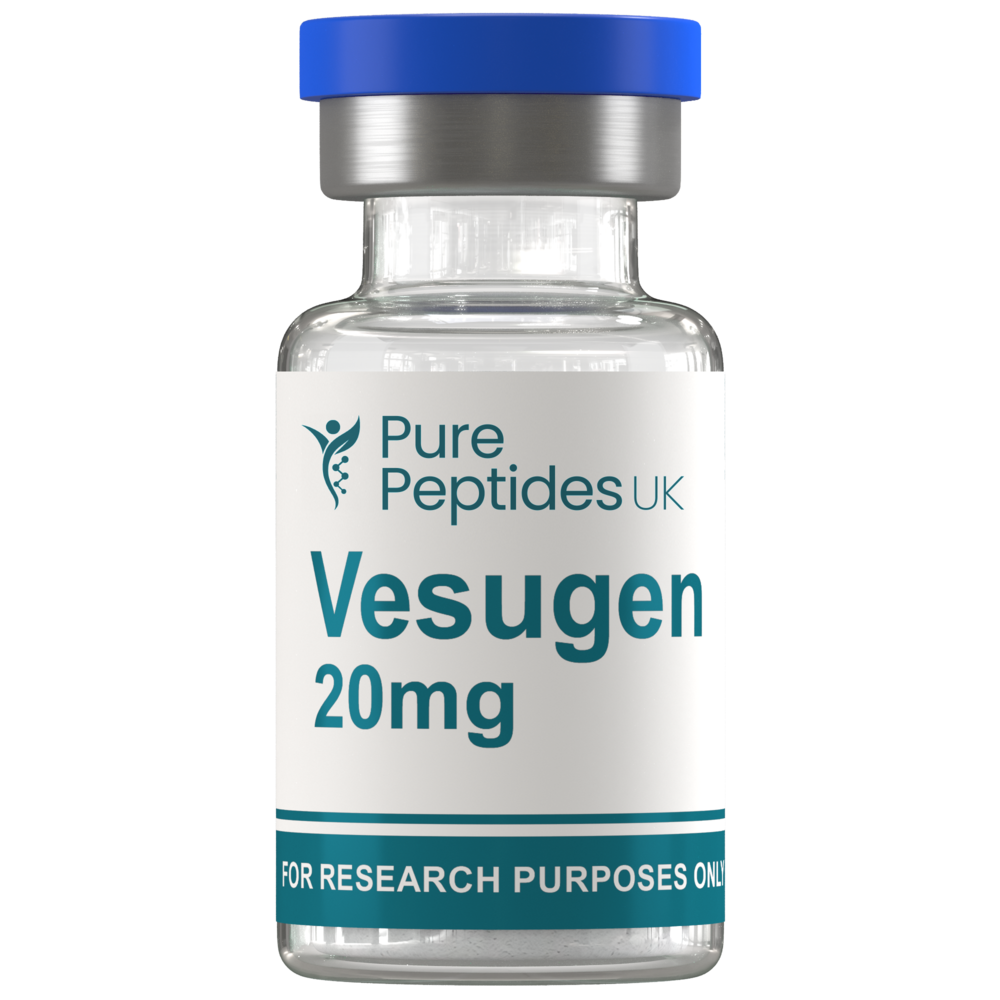
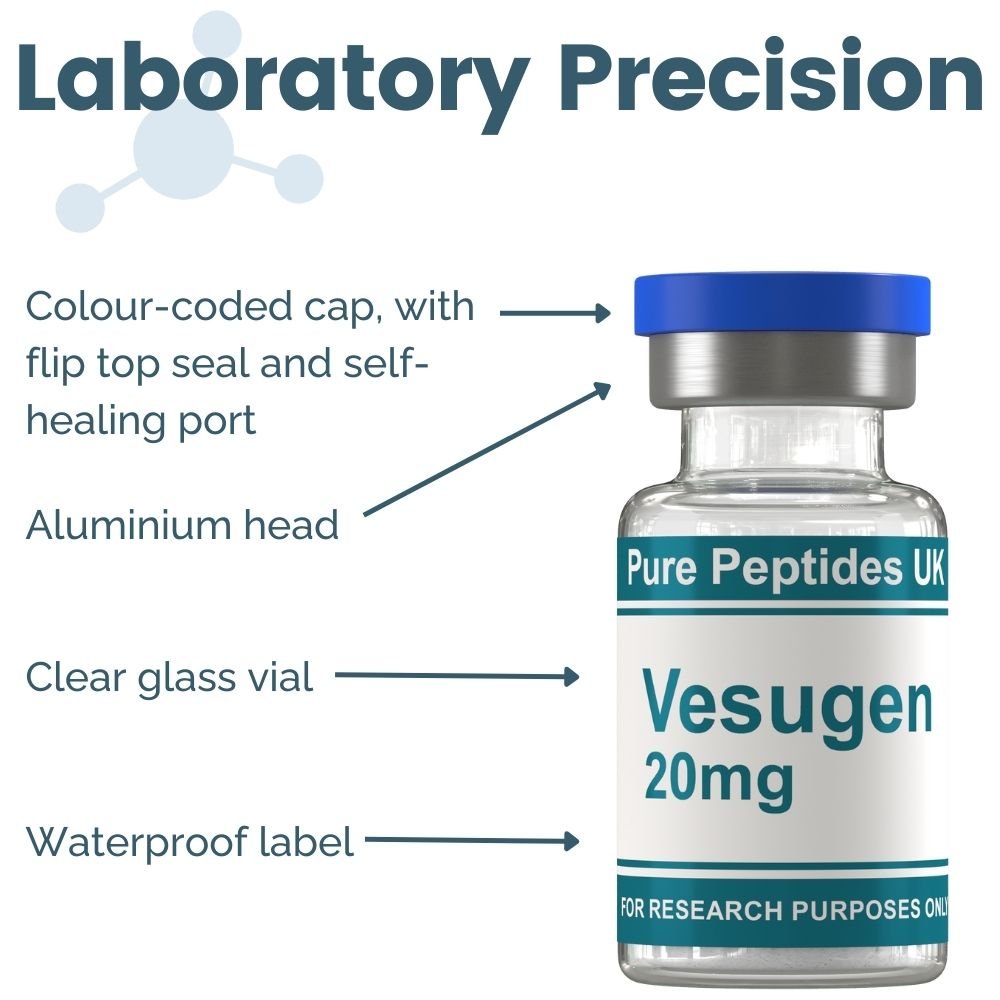


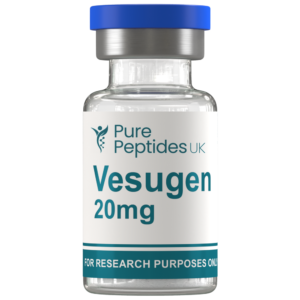



Vesugen 20 mg
Product Overview
Vesugen is a short synthetic tripeptide composed of lysine, glutamic acid, and aspartic acid (Lys–Glu–Asp). It has attracted research interest due to its potential role in vascular biology, microcirculation, immune modulation, and tissue regeneration. Vesugen is primarily studied in laboratory settings focused on vascular and neurological health models.
The 20 mg format is suitable for extended or repeated experimental applications where consistent peptide availability is required.
Understanding Vesugen
Vesugen originated from peptide research exploring biologically active sequences derived from regulatory proteins. Despite its short length, Vesugen has demonstrated activity in experimental models related to blood vessel function, inflammatory signalling, and cellular repair mechanisms.
Its simple molecular structure allows for high stability and reproducibility in controlled laboratory environments.
Mechanism of Action (Research Context)
In research settings, Vesugen is investigated for its potential involvement in:
-
Regulation of microcirculation and vascular tone
-
Modulation of inflammatory signalling pathways
-
Interaction with immune response mechanisms
-
Support of cellular repair and tissue regeneration processes
These mechanisms are explored through in vitro and in vivo experimental models, particularly those related to vascular ageing and endothelial function.
Areas of Research Interest
Vesugen is commonly studied in laboratory research involving:
-
Inflammation models – examining anti-inflammatory signalling pathways
-
Immunology research – exploring immune response modulation
-
Regenerative medicine studies – tissue repair and cellular regeneration
-
Vascular research – microcirculation and endothelial function
-
Age-related research models – vascular and neurological resilience
All applications are strictly non-clinical and for scientific investigation only.
Conclusion
Vesugen represents a focused example of how short peptide sequences can exhibit biologically relevant activity in research environments. Its potential roles in vascular regulation, immune modulation, and tissue regeneration make it a valuable peptide for ongoing scientific investigation. While further research is required to fully characterise its mechanisms, Vesugen remains an intriguing candidate within peptide-based research.
Technical Details
-
Synonyms: Lysylglutamyl aspartic acid, Lys-Glu-Asp, SCHEMBL3767701
-
Sequence: KED
-
IUPAC Condensed: H-Lys-Glu-Asp-OH
-
Molecular Weight: 390.39 g/mol
-
PubChem CID: 87571363
-
Reference: PubChem Link
Storage & Stability
-
Stability: Store lyophilised peptide at −20 °C
-
Aliquot after reconstitution to avoid repeated freeze–thaw cycles
-
Reconstituted peptide may be stored at 4 °C for a limited period
-
Lyophilised peptide remains stable until expiry when stored at −20 °C
-
Source: Biosynthesis
-
Reconstitution: Reconstitute with bacteriostatic water
Usage Disclaimer
This product is supplied for laboratory research purposes only.
Vesugen sold by Pure Peptides UK is intended exclusively for scientific research and educational use. Purchase and use are restricted to licensed researchers.
| Cap Colour | Blue |
|---|
Related products
Peptides
Peptides
Peptides

Peptides
Longevity
Peptides


Peptides