
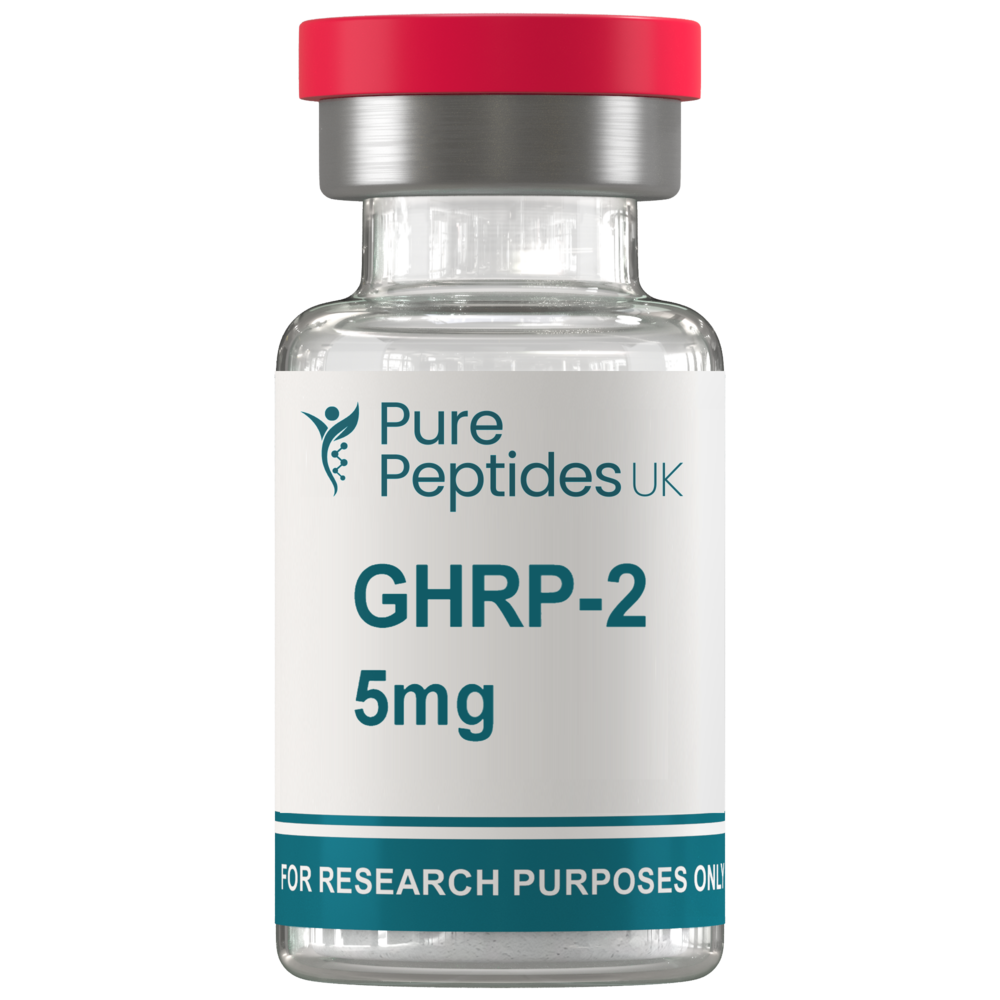



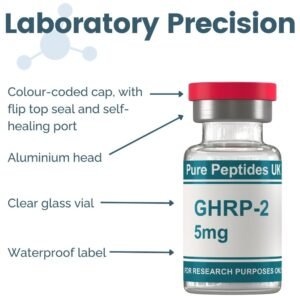


GHRP-2 – 5 mg
GHRP-2 (Growth Hormone Releasing Peptide-2) is a synthetic peptide from the growth hormone secretagogue (GHS) family. It is a met-enkephalin analog containing D-amino acids, designed to stimulate the secretion of growth hormone (GH) via direct interaction with receptors in both the pituitary gland and hypothalamus. GHRP-2 has been of particular interest to researchers exploring endocrine modulation, appetite regulation, and metabolic homeostasis. Supplied as a lyophilised peptide, it is intended strictly for laboratory research purposes only.
Research Focus and Areas of Interest
1. Growth Hormone Secretion
GHRP-2 has been shown to act as a potent stimulator of GH release, primarily through activation of the growth hormone secretagogue receptor (GHS-R1a). This action promotes the study of mechanisms governing pulsatile GH secretion, GH synthesis, and downstream pathways involving insulin-like growth factor 1 (IGF-1).
2. Hypothalamic–Pituitary Regulation
Researchers are exploring GHRP-2’s ability to interact with both the hypothalamus and anterior pituitary. Studies focus on how this dual-site mechanism may contribute to endocrine balance and hormonal feedback control, providing valuable insights into pituitary signaling and neuroendocrine function.
3. Appetite and Metabolic Studies
In laboratory settings, GHRP-2 has been used to investigate ghrelin-like effects on appetite stimulation and energy balance. Its capacity to bind to ghrelin receptors makes it a useful research tool for examining metabolic regulation, nutrient sensing, and energy homeostasis.
4. Cellular Protection and Regeneration
Emerging research suggests that GH-releasing peptides like GHRP-2 may possess cytoprotective and regenerative properties, supporting studies into cellular recovery mechanisms and tissue preservation. Investigations continue into how GHRP-2 influences oxidative stress, apoptosis, and mitochondrial stability.
5. Comparative Peptide Analysis
GHRP-2 is frequently compared with other GH secretagogues such as GHRP-6 and Ipamorelin to evaluate receptor selectivity, potency, and duration of action. Such comparisons help identify structure–activity relationships and refine the understanding of GH-related regulatory networks.
Conclusion
GHRP-2 represents a cornerstone compound in endocrine and metabolic research. By stimulating GH release and influencing appetite and cellular signaling, it provides researchers with a powerful model for studying hormonal regulation and growth factor pathways. This product is supplied exclusively for laboratory research only and is not intended for therapeutic or diagnostic use.
Technical Information:
-
Synonyms: Pralmorelin; KP-102
-
Modified Single-Letter Sequence: A–X–A–W–F–K
-
IUPAC Condensed Sequence: H–D–Ala–D–2Nal–Ala–Trp–D–Phe–Lys–NH₂
-
Molecular Weight: 818.0 g/mol
-
CAS Number: 158861-67-7
-
PubChem CID: 6918245
-
Further Reference: PubChem Link
Stability, Source, and Handling
-
Stability: Store lyophilised peptide at –20 °C. Avoid repeated freeze–thaw cycles. Once reconstituted, store at 4 °C for a limited period. Product remains stable until expiry when stored correctly.
-
Source: Biosynthetic preparation with controlled purity standards.
-
Reconstitution: Reconstitute with bacteriostatic water under aseptic conditions.
-
Usage: Product is prepared for LABORATORY RESEARCH ONLY. GHRP-2 for sale at Pure Peptides UK is restricted to scientific and educational research use only.
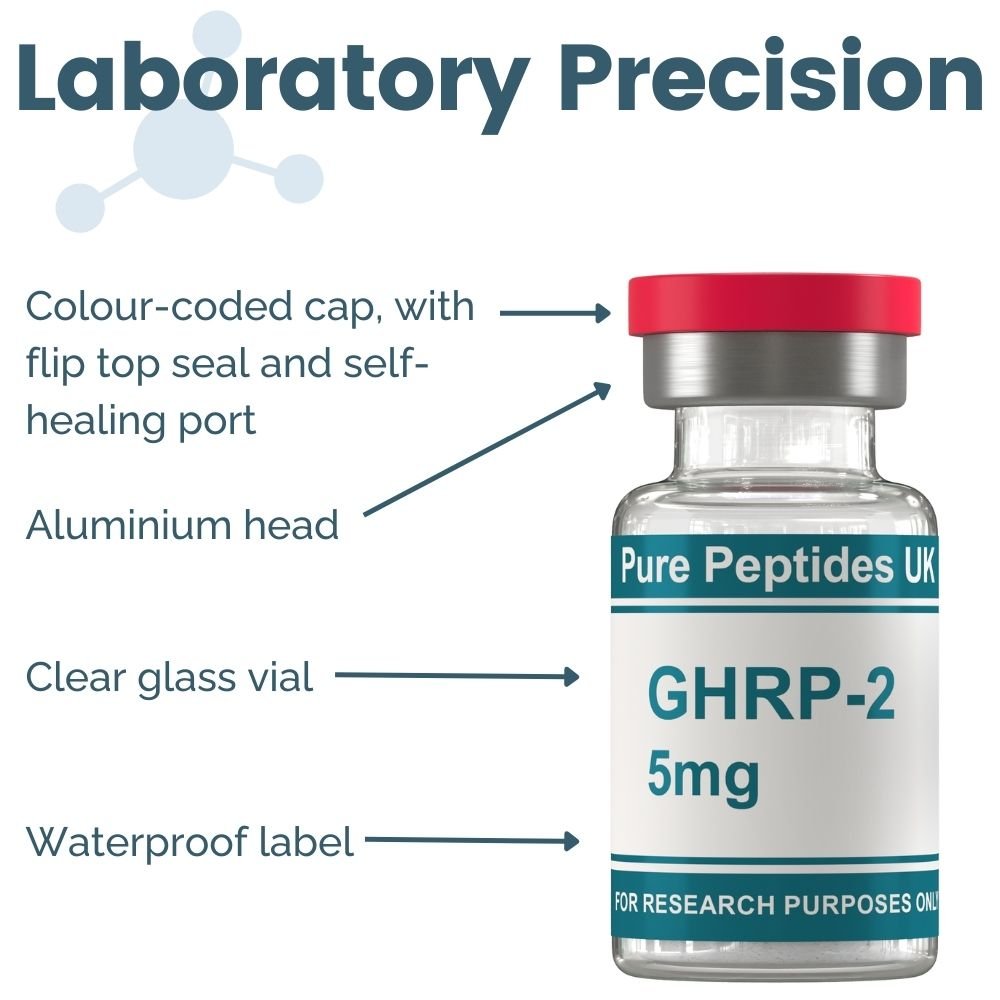
| Cap Colour | Red or Green |
|---|
Related products
Peptides


Longevity
Peptides
Cosmetic


Peptides
Longevity


Longevity
Cosmetic