
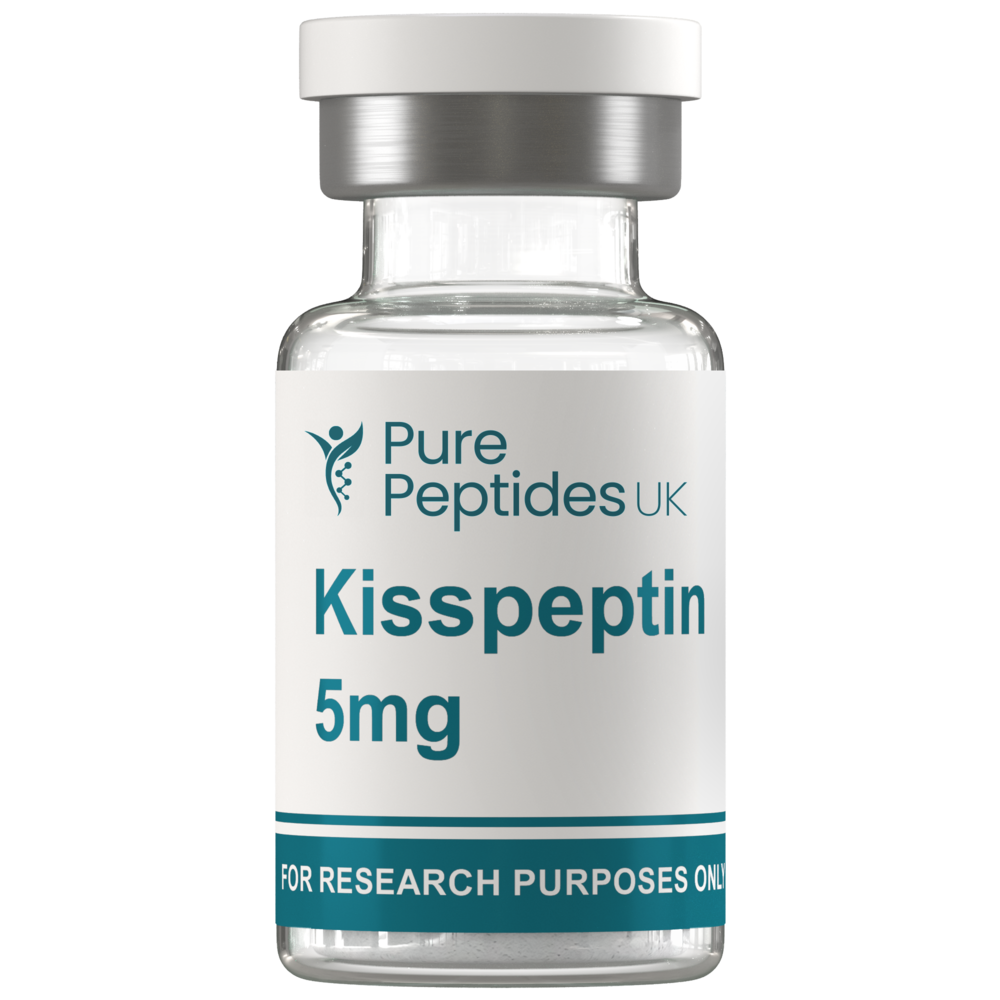


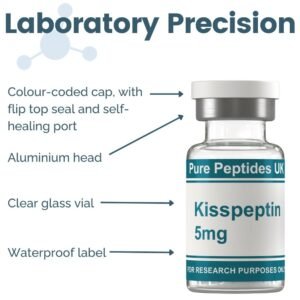


Kisspeptin – 5mg
Kisspeptin is a naturally occurring neuropeptide that plays a fundamental role in the regulation of reproductive hormone release. It acts primarily by stimulating gonadotropin-releasing hormone (GnRH) neurons, which in turn influence the secretion of luteinising hormone (LH) and follicle-stimulating hormone (FSH) from the anterior pituitary. Originally discovered in the early 2000s in Hershey, Pennsylvania—hence its name inspired by the “Hershey’s Kiss”—this peptide is now considered a vital component of the hypothalamic–pituitary–gonadal (HPG) axis.
In research environments, Kisspeptin is widely studied for its involvement in pubertal onset, fertility regulation, and reproductive signalling pathways. Pure Peptides UK supplies Kisspeptin in a 5mg lyophilised form suitable for laboratory research only.
Research Focus and Areas of Interest
1. Reproductive Hormone Regulation
Kisspeptin is recognised for its direct action on GnRH neurons in the hypothalamus. Research suggests that Kisspeptin binding to the KISS1R receptor (formerly GPR54) initiates intracellular signalling cascades that influence the pulsatile release of GnRH, a central mechanism controlling LH and FSH secretion. This has made Kisspeptin a critical peptide for understanding endocrine feedback loops that govern fertility and reproductive maturity.
2. Pubertal Development Mechanisms
Studies into the KISS1 gene and its receptor pathways have revealed Kisspeptin’s potential involvement in triggering the onset of puberty. Researchers continue to explore how Kisspeptin expression levels influence gonadal activation and sexual maturation, particularly through its interaction with sex steroid feedback in the hypothalamus.
3. Metabolic and Energy Balance
Emerging research indicates that Kisspeptin may link metabolic status with reproductive capability. Investigations have shown that energy balance and nutritional state can affect Kisspeptin expression, suggesting it may serve as a metabolic sensor integrating physiological cues with hormonal activity.
4. Neuroendocrine Signalling
Beyond reproductive function, Kisspeptin is also being studied for its broader neuromodulatory properties. Evidence points to roles in mood regulation, stress response, and behavioural modulation, making it a peptide of growing interest across neuroendocrine research disciplines.
Conclusion
Kisspeptin represents a cornerstone in the study of reproductive endocrinology, offering insights into the hormonal coordination between the brain and gonadal systems. Its function as a master regulator of GnRH activity positions it as a valuable peptide for exploring the molecular underpinnings of fertility, puberty, and neuroendocrine health. As such, Kisspeptin continues to attract significant interest within both academic and applied research environments.
Technical Information
-
Synonyms: KISS-1, Protein KISS-1, Metastin (45–54), KP-10 peptide
-
Modified Single-Letter Amino Acid Sequence: YNWNSFGLRF
-
IUPAC Condensed Amino Acid Sequence: H–Tyr–Asn–Trp–Asn–Ser–Phe–Gly–Leu–Arg–Phe–NH₂
-
Molecular Weight: 1302.45 g/mol
-
CAS Number: 374675-21-5
-
PubChem CID: 25240297
-
Further Reference: PubChem Link
Storage and Stability
-
Stability: Store lyophilised peptide at –20°C. After reconstitution, aliquot to avoid repeated freeze–thaw cycles. Reconstituted product may be stored at 4°C for a limited period. Lyophilised peptide remains stable until expiry when stored at –20°C.
-
Source: Biosynthesis
-
Reconstitution: Reconstitute with Bacteriostatic Water
-
Usage: Product is prepared for LABORATORY RESEARCH ONLY. Kisspeptin for sale at Pure Peptides UK is intended solely for scientific and educational purposes. Only licensed researchers should purchase or handle this compound.
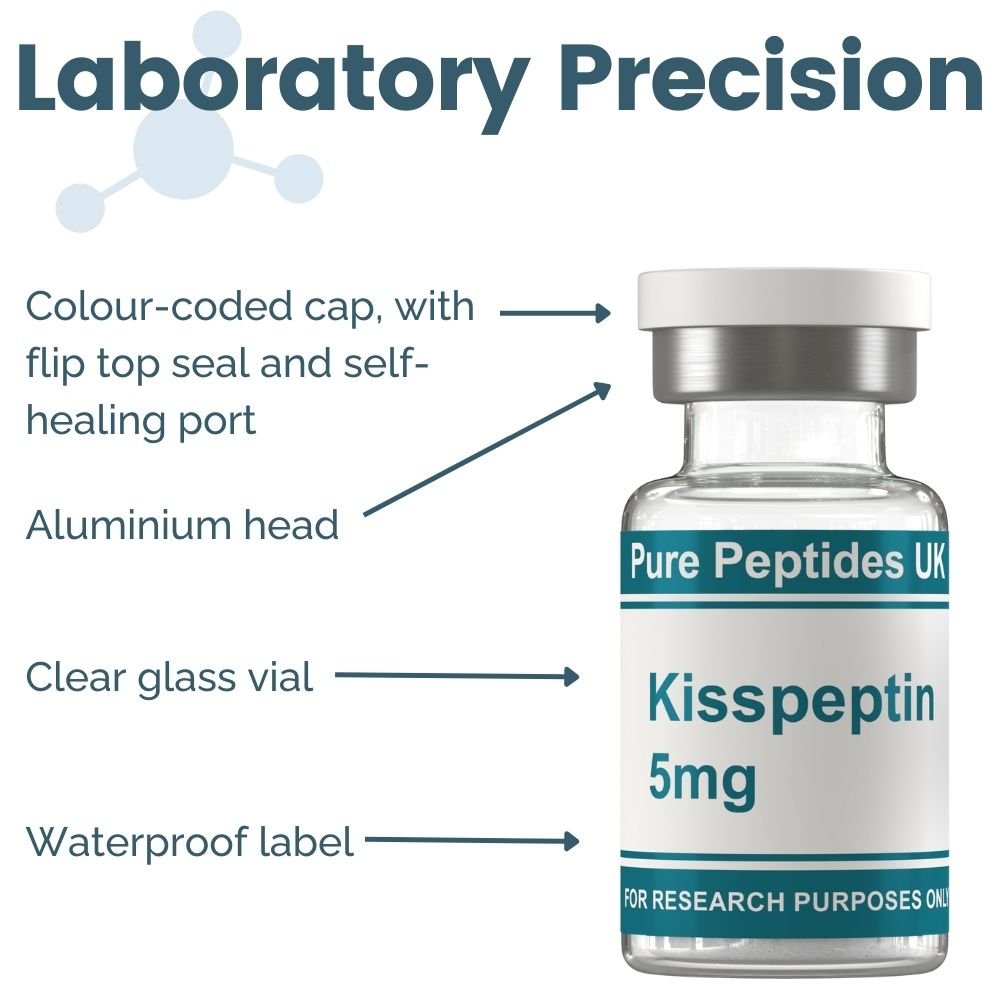
| Cap Colour | White |
|---|
Related products
Peptides
Cosmetic


Longevity

Peptides
Peptides
Peptides
Peptides
Peptides