
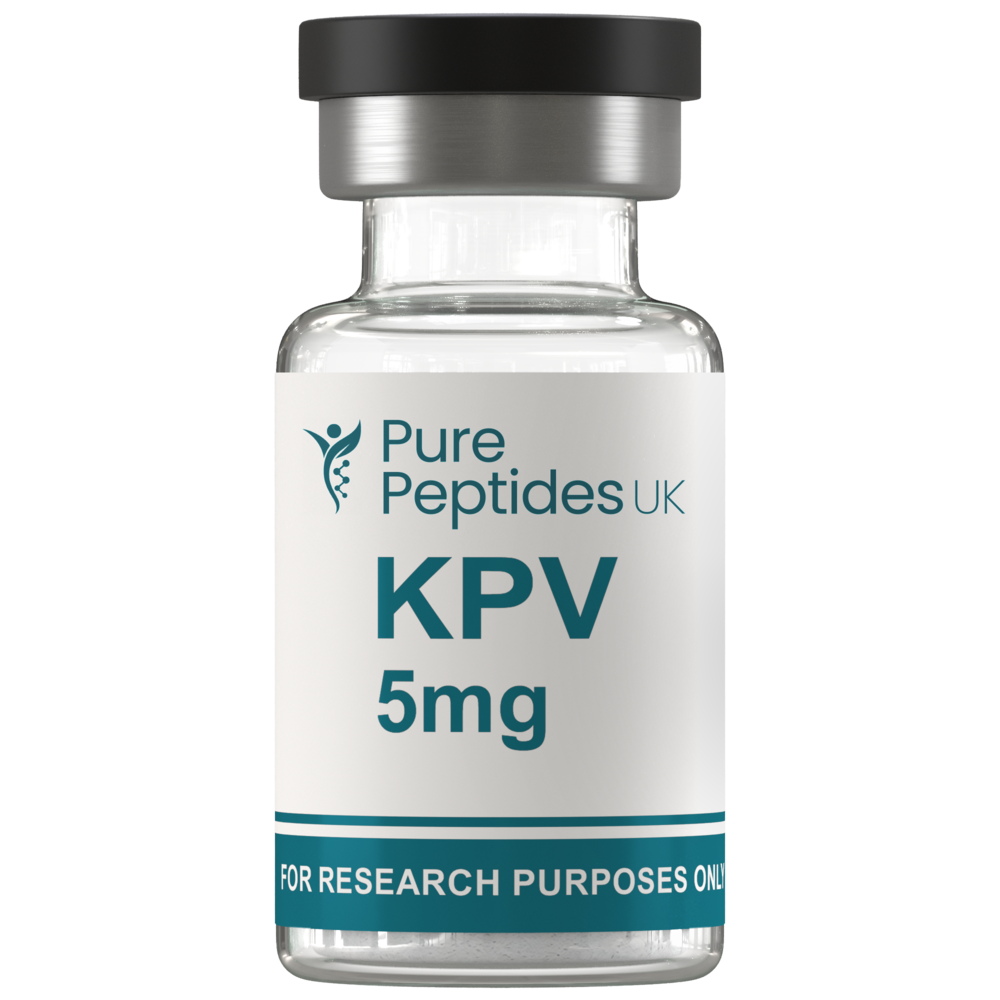
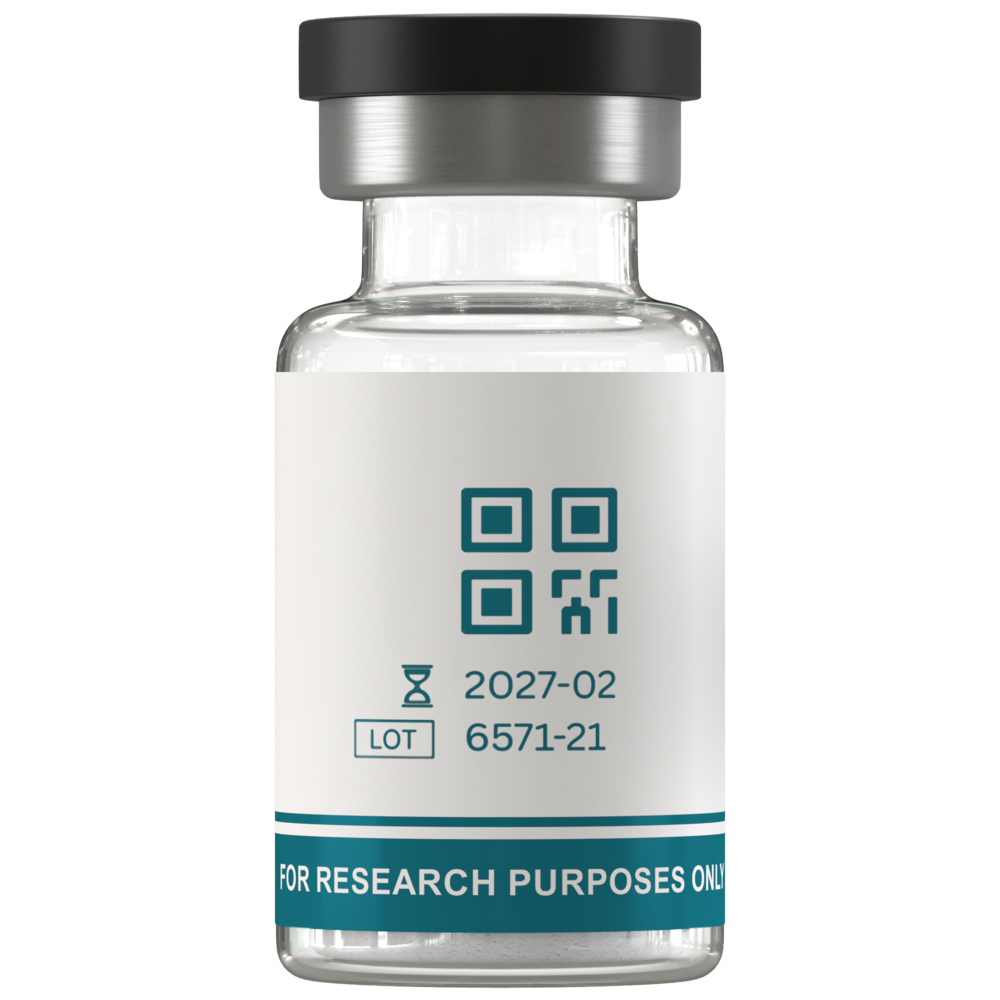
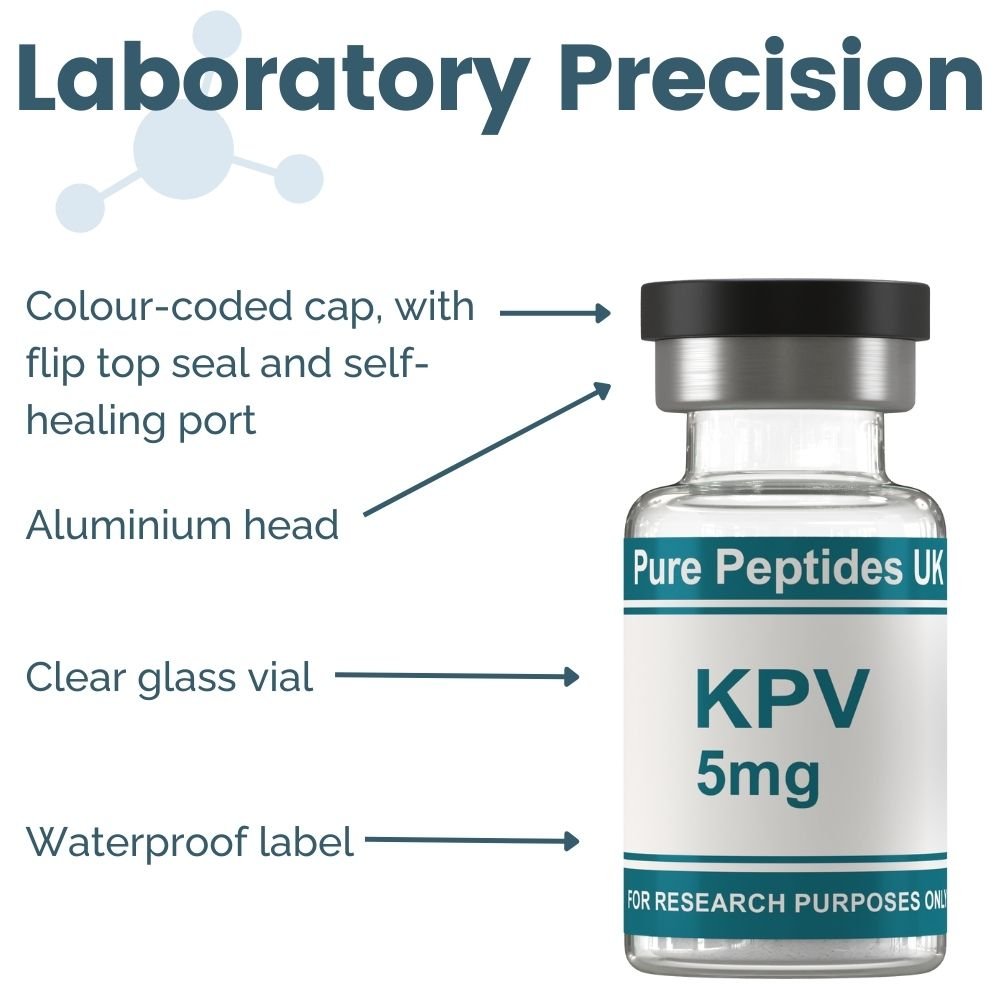


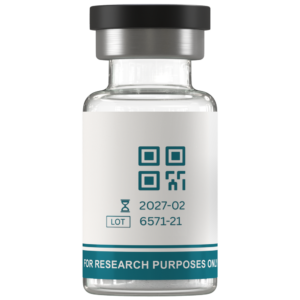
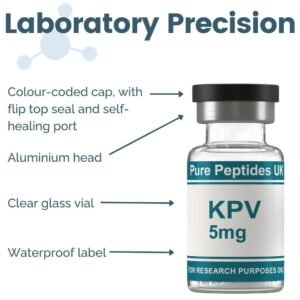


KPV 5mg
$21.50
KPV is a tripeptide derived from α-MSH, widely studied for its role in immune modulation, inflammatory response, and cellular homeostasis. Researchers are exploring its interactions with cytokine pathways, oxidative stress regulation, and peptide bioavailability. With its small, stable structure, KPV is a key peptide in studies on molecular signaling and immune response. For research use only.
KPV – 5mg
KPV is a tripeptide consisting of Lysine (K), Proline (P), and Valine (V), derived from the C-terminal sequence of α-Melanocyte-Stimulating Hormone (α-MSH). As a naturally occurring peptide fragment, KPV has been a key focus of research into inflammatory modulation, immune response, skin health, and tissue regeneration. Its small molecular structure allows for high stability and efficient interaction with various biochemical pathways, making it an essential tool in peptide-based immunological, dermatological, and regenerative research.
Research Focus and Areas of Interest
1. Anti-Inflammatory Properties and Cytokine Modulation
One of the most widely studied aspects of KPV is its potential anti-inflammatory properties. Researchers have explored its effects on cytokine signaling, particularly in relation to:
- Inhibition of pro-inflammatory cytokines, such as TNF-α, IL-1β, and IL-6.
- Interaction with the melanocortin system, which plays a crucial role in immune modulation.
- Modulation of nuclear factor-kappa B (NF-κB) activity, a key regulator of inflammatory pathways.
Due to its potential influence on immune system balance, KPV has attracted attention in studies related to chronic inflammatory conditions and cellular resilience.
2. Skin Health and Collagen Production
KPV has gained interest in dermatological research, particularly in studies focused on skin health and collagen production. Researchers are exploring its ability to:
- Support extracellular matrix integrity, which plays a role in skin elasticity and hydration.
- Influence fibroblast activity, which contributes to collagen synthesis and skin renewal.
- Assist in skin barrier function, through potential interactions with epithelial tissue homeostasis.
These properties make KPV a relevant peptide in skincare, anti-aging research, and epithelial repair studies.
3. Wound Healing and Tissue Regeneration
KPV has been examined in studies investigating wound healing and tissue regeneration, particularly for its:
- Potential to enhance tissue remodeling and repair processes.
- Anti-inflammatory effects at injury sites, which could help regulate excessive inflammatory responses.
- Possible role in accelerating epithelial and connective tissue recovery.
Research continues to explore how KPV may contribute to tissue regeneration and cellular adaptation following injury or environmental stressors.
4. Potential Research Applications
Beyond its role in immune modulation, skin health, and wound healing, KPV has been studied for its potential applications in:
- Materials science, particularly in biomaterials research due to its peptide-based structure.
- Molecular biology and bioengineering, where small peptides are examined for their stability and cellular interactions.
- Pharmacokinetics and peptide delivery, as researchers explore its ability to interact with biological membranes efficiently.
Peptide Stability and Bioavailability
KPV is notable for its small size and high bioavailability, making it an ideal candidate for peptide-based biochemical and pharmacological studies. Its research advantages include:
- High solubility and enzymatic stability, ensuring efficient interaction with target systems.
- Potential systemic bioactivity, leading to broad research applications in peptide signaling.
- Ability to be synthesized in stable formulations, supporting ongoing studies in molecular modeling and peptide therapeutics.
Conclusion
Due to its broad applications in research, KPV remains a key peptide for studies focusing on inflammatory response, skin health, wound healing, and bioavailability research. Researchers continue to explore its potential role in modulating cytokine pathways, enhancing tissue recovery, and supporting molecular stability, making it an essential tool in peptide-based investigations.
For research use only. Not approved for human or veterinary applications.
Technical Information:
• Synonyms: Lys-Pro-Val, α-MSH (11-13), KPV Tripeptide
• Modified Single-Letter Amino Acid Sequence: KPV
• IUPAC Condensed Amino Acid Sequence: Lys-Pro-Val
• Molecular Weight: 341.46 g/mol
• CAS Number: 67727-95-9
• PubChem CID: 137624473
• Further Research: PubChem
Stability: Store lyophilised protein at -20°c. Aliquot the product after reconstitution to avoid repeated freezing/thawing cycles. Reconstituted protein can be stored at 4°c for a limited period of time. The lyophilised protein remains stable until expiry date when stored at -20°c.
Source: Biosynthesis
Reconstitution: Reconstitute with Bacteriostatic Water
Usage: Product is prepared for LABORATORY RESEARCH ONLY. KPV for sale at Pure Peptides UK is limited to scientific research and education only – Only buy KPV if you are a licenced researcher.
* Images for illustration purposes only
| Cap Colour | Black |
|---|
Related products


Peptides
Cosmetic

Longevity
Peptides
Peptides

Peptides

Peptides
Longevity