
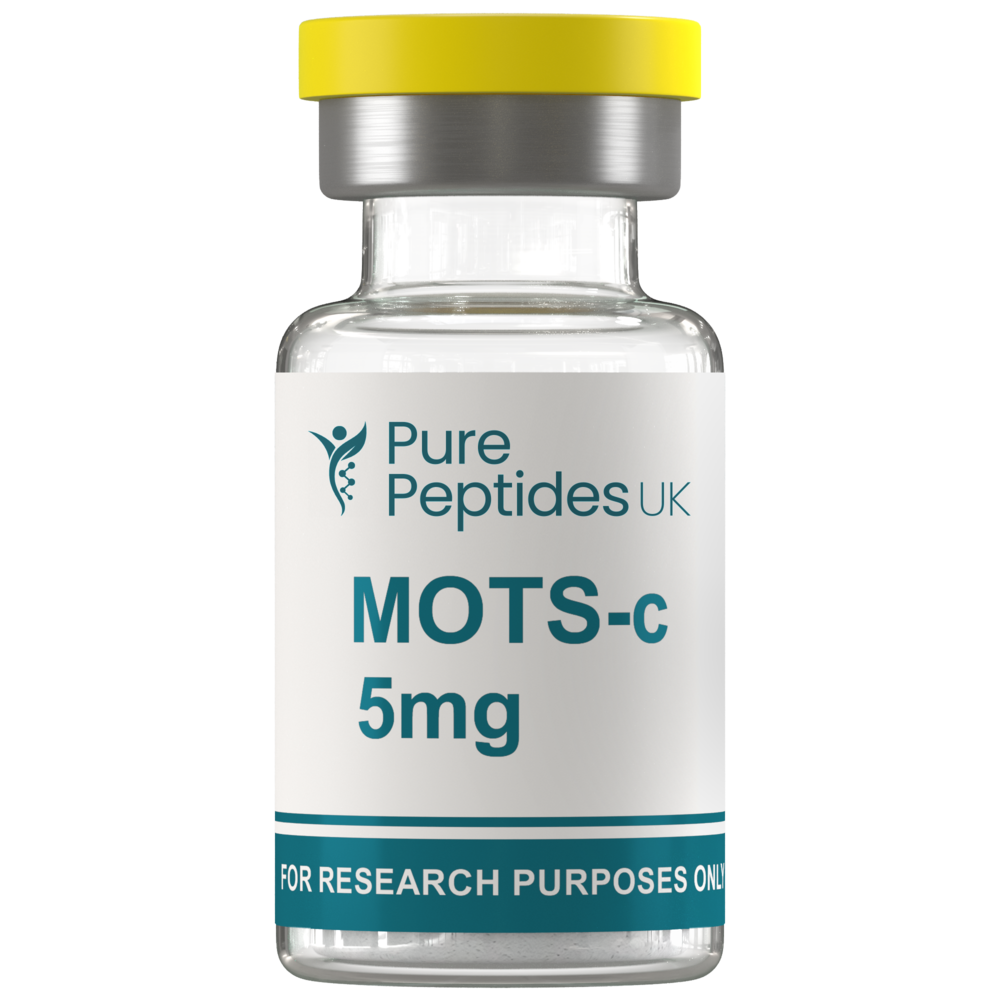








MOTS-c 5mg
Overview
MOTS-c is a mitochondrial-derived peptide (MDP) that has gained significant scientific interest for its potential role in metabolic regulation, energy balance, and cellular health. Composed of 16 amino acids and encoded within the 12S rRNA region of mitochondrial DNA (mtDNA), MOTS-c belongs to a unique class of peptides that act as messengers between mitochondria and the rest of the cell.
By influencing cellular metabolism, MOTS-c contributes to research exploring energy production, insulin sensitivity, and adaptive metabolism — offering insight into how cells manage energy utilisation and respond to metabolic stress.
The 5mg variant of MOTS-c provides researchers with a convenient format for controlled study environments where smaller experimental quantities are required.
Scientific Background
MOTS-c is one of several mitochondrial-derived peptides identified in recent decades, marking a new chapter in mitochondrial research. Unlike traditional peptides encoded by nuclear DNA, MOTS-c originates from mitochondrial genetic material, enabling it to play a direct role in mitochondrial-to-nuclear communication (retrograde signalling).
Through this mechanism, MOTS-c is believed to help regulate cellular energy homeostasis, metabolic adaptation, and oxidative balance, making it a focal point in studies of metabolic disorders, ageing, and cellular stress responses.
Mechanism of Action
Research indicates that MOTS-c functions primarily through activation of the AMP-activated protein kinase (AMPK) pathway, a master regulator of energy metabolism.
By stimulating AMPK and related signalling cascades, MOTS-c may help:
-
Enhance glucose uptake and utilisation in muscle cells
-
Increase fatty acid oxidation
-
Promote mitochondrial biogenesis and efficiency
-
Improve cellular resilience under metabolic stress
These effects position MOTS-c as an intriguing research target for exploring energy regulation and metabolic flexibility at the molecular level.
Research Focus Areas
-
Metabolic Flexibility
MOTS-c is being studied for its ability to enhance the body’s adaptability between carbohydrate and fat metabolism — a key factor in maintaining energy efficiency and balance. -
Insulin Sensitivity and Glucose Homeostasis
Research suggests MOTS-c may influence glucose handling and insulin responsiveness, providing valuable insight into metabolic health mechanisms. -
Cellular Energy Regulation
As a mitochondrial peptide, MOTS-c may support energy efficiency by influencing ATP production and reducing oxidative stress. -
Healthy Ageing and Longevity Pathways
MOTS-c is of growing interest for its potential role in mitochondrial communication and age-related cellular maintenance.
Technical Details
- Synonyms: Mitochondrial Open Reading Frame of the 12S rRNA-c, MOTS-c Peptide
- Sequence: MRWQEMGYIFYPRKLR
- IUPAC Condensed: H-Met-Arg-Trp-Gln-Glu-Met-Gly-Tyr-Ile-Phe-Tyr-Pro-Arg-Lys-Leu-Arg-OH
- Molecular Weight: 2174.6 g/mol
- CAS Number: 1627580-64-6
- PubChem CID: 155885767
- Further References: PubChem
Stability and Storage
Store lyophilised protein at –20 °C. After reconstitution, aliquot the product to prevent repeated freeze–thaw cycles.
Reconstituted peptide may be stored at 4 °C for short-term use.
The lyophilised peptide remains stable until the expiry date when kept at –20 °C.
Source and Reconstitution
Source: Biosynthesis
Reconstitution: Reconstitute with Bacteriostatic Water
Usage
Product is intended for laboratory research only.
MOTS-c for sale at Pure Peptides UK is limited to scientific research and educational purposes.
Only purchase MOTS-c if you are a licenced researcher.
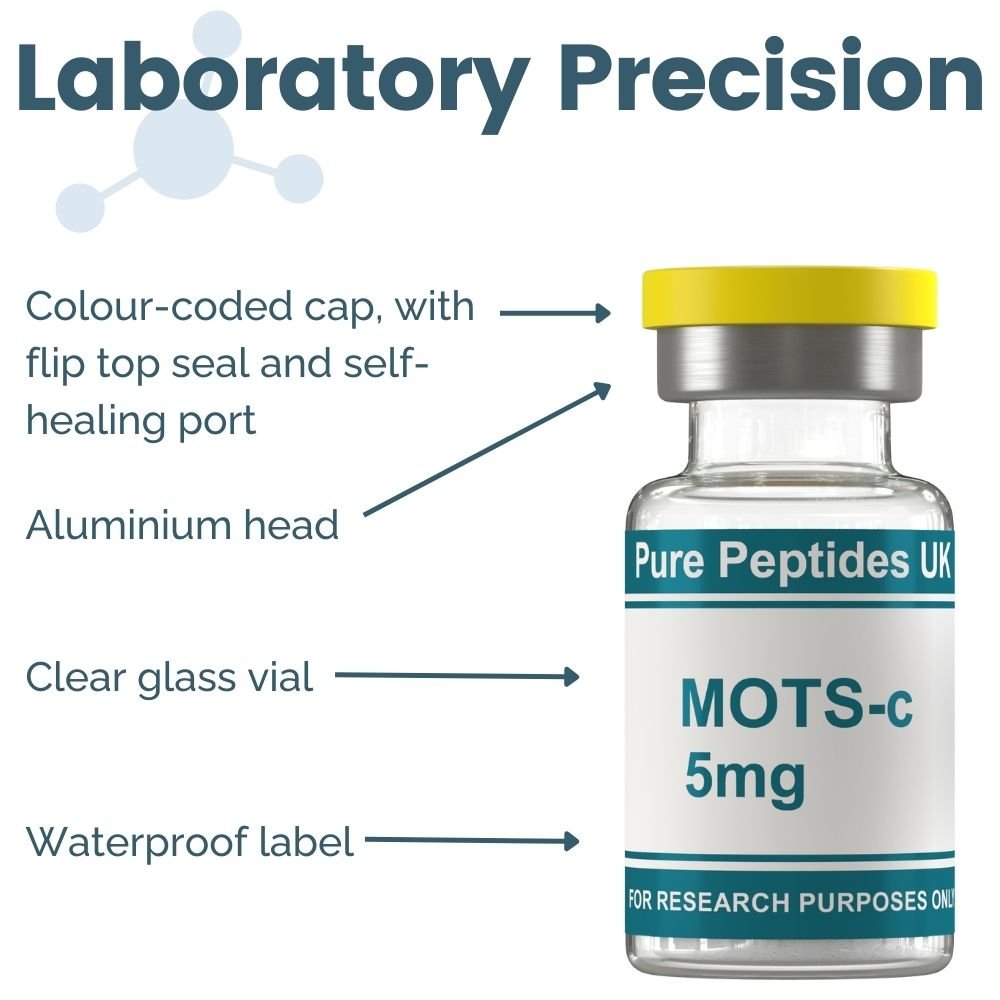
Images for illustration purposes only.
Conclusion
MOTS-c represents a cutting-edge development in mitochondrial research, offering insights into how cells manage energy production, stress response, and metabolic regulation. As a mitochondrial-encoded peptide, MOTS-c continues to attract interest for its possible roles in metabolic health and ageing research.
The 5mg format offers flexibility for laboratories conducting small-scale or pilot studies exploring its biochemical properties and functions.
| Cap Colour | Yellow |
|---|
Related products

Longevity


Peptides

Peptides


Longevity


Longevity


Peptides

Peptides


Cosmetic