
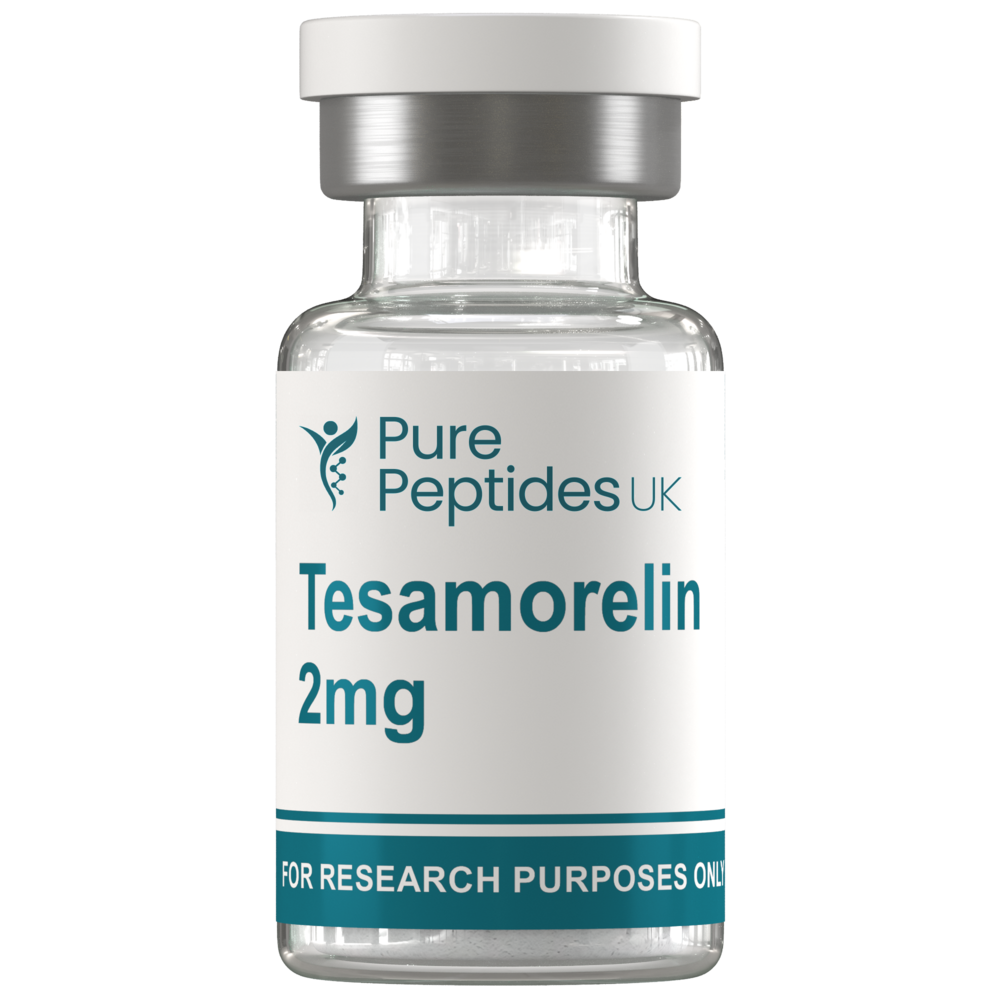


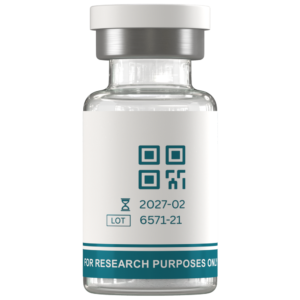
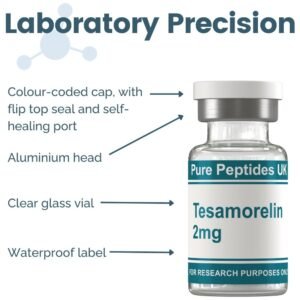


Tesamorelin 2mg
Product Overview
Tesamorelin is a synthetic peptide analogue of human growth hormone-releasing factor (GRF), consisting of the full 44-amino-acid GRF sequence with a stabilising 3-hexenoyl group attached to the N-terminal tyrosine residue. This structural modification is designed to enhance peptide stability while preserving biological activity relevant to laboratory research.
Tesamorelin has become a compound of interest in experimental studies exploring growth hormone signalling, metabolic regulation, and endocrine function.
Understanding Tesamorelin
Tesamorelin belongs to the growth hormone-releasing hormone (GHRH) peptide family. In biological systems, GRF plays a central role in regulating the pulsatile secretion of growth hormone (GH) from the anterior pituitary gland.
By retaining the complete GRF amino acid sequence, Tesamorelin allows researchers to investigate endogenous GH release mechanisms rather than introducing exogenous growth hormone directly. This makes it particularly valuable in studies focused on physiological hormone signalling pathways.
Mechanism of Action (Research Context)
In laboratory and preclinical research models, Tesamorelin is observed to:
-
Bind to GHRH receptors in the hypothalamic–pituitary axis
-
Stimulate endogenous growth hormone release
-
Promote pulsatile GH secretion patterns
-
Influence downstream pathways related to metabolism and tissue maintenance
This receptor-mediated mechanism distinguishes Tesamorelin from direct GH analogues and underpins ongoing research interest.
Areas of Research Interest
Current research involving Tesamorelin commonly explores:
-
Growth hormone secretion dynamics
-
Metabolic regulation and lipid metabolism
-
Endocrine signalling pathways
-
Age-related changes in GH output
-
Body composition and energy balance (experimental models only)
All investigations remain strictly within controlled laboratory research environments.
Conclusion
Tesamorelin is a well-characterised GHRH analogue that provides researchers with a robust tool for studying growth hormone regulation and endocrine signalling. Its full-length GRF sequence and stabilised structure make it particularly suitable for investigations into physiological GH release mechanisms. The 2mg format supports precise experimental dosing and flexible study design.
Technical Details
-
Synonyms: Egrifta, TH9507
-
Sequence: YADAIFTNSYRKVLGQLSARKLLQDIMSRQQGESNQERGARARL
-
IUPAC Condensed: Unk-Tyr-Ala-Asp-Ala-Ile-Phe-Thr-Asn-Ser-Tyr-Arg-Lys-Val-Leu-Gly-Gln-Leu-Ser-Ala-Arg-Lys-Leu-Leu-Gln-Asp-Ile-Met-Ser-Arg-Gln-Gln-Gly-Glu-Ser-Asn-Gln-Glu-Arg-Gly-Ala-Arg-Ala-Arg-Leu-NH₂
-
Molecular Weight: ~5,136 g/mol
-
CAS Number: 218949-48-5
-
PubChem CID: 16137828
-
Reference: PubChem Link
Storage & Stability
-
Stability: Store lyophilised peptide at -20 °C
-
Aliquot after reconstitution to avoid repeated freeze–thaw cycles
-
Reconstituted solution may be stored at 4 °C for a limited period
-
Lyophilised peptide remains stable until expiry when stored at -20 °C
-
Source: Biosynthesis
-
Reconstitution: Reconstitute with bacteriostatic water
Usage Disclaimer
This product is supplied for laboratory research purposes only.
Tesamorelin sold by Pure Peptides UK is intended solely for scientific research and educational use. Purchase and use are restricted to licensed researchers.
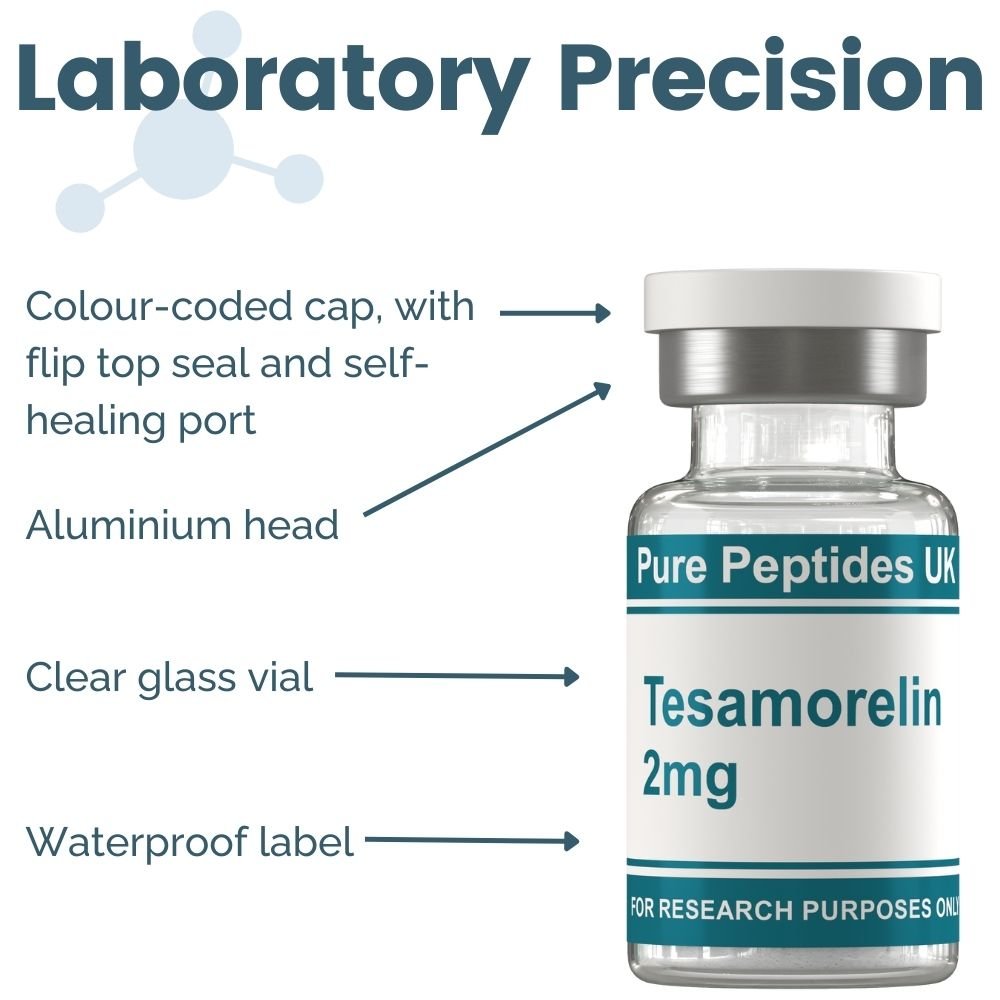
| Cap Colour | White |
|---|
Related products
Peptides


Peptides

Peptides
Cosmetic

Peptides
Cosmetic
Peptides


Cosmetic